


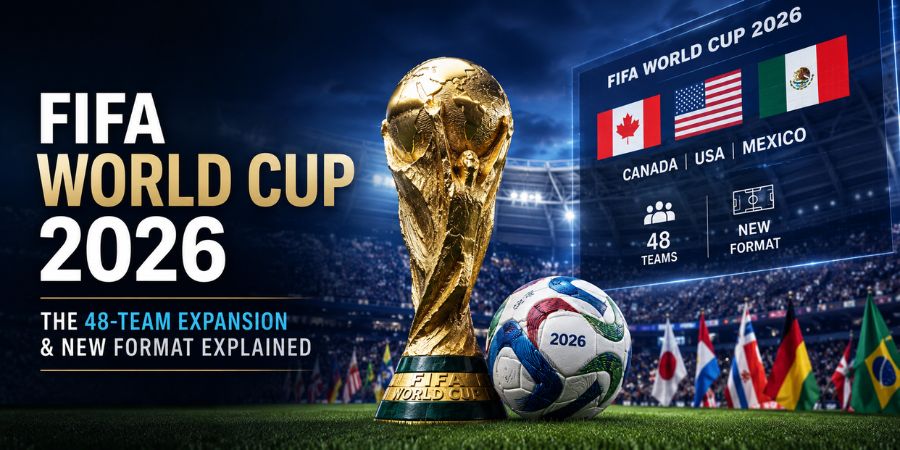
The global game is entering its most transformative era since the modern World Cup began. With the arrival of the FIFA World Cup 2026, football is expanding beyond tradition into a bold new structure designed to include more nations, more matches, and a wider global audience than ever before. For the first time, the tournament will feature 48 teams instead of the long-standing 32-team format, reshaping qualification pathways, group dynamics, and knockout intensity.
This shift is not just numerical—it represents a strategic evolution in world football governance. Co-hosted by the United States, Canada, and Mexico, the expanded format reflects FIFA’s ambition to globalize competition while increasing commercial reach and sporting inclusivity. Yet it also introduces complex questions about balance, competitiveness, and player workload.
As anticipation builds, understanding the FIFA World Cup 2026 structure becomes essential for fans, analysts, and the broader football ecosystem preparing for a dramatically redesigned tournament landscape.
How the 48-Team Expansion Redefines the FIFA World Cup 2026 Format
The expansion to 48 teams marks one of the most significant structural changes in World Cup history. Under the new design, the tournament will move away from the traditional 8-group, 32-team system and adopt a broader, more inclusive format.
The revised structure features:
- 48 qualified national teams
- 12 groups of 4 teams each
- Top 2 teams from each group automatically advancing
- Additional best third-placed teams filling out a 32-team knockout bracket
This adjustment ensures that the tournament retains a familiar knockout stage while dramatically increasing participation at the group level.
The FIFA World Cup 2026 structure, governed by FIFA World Cup 2026, is designed to balance inclusivity with competitive integrity, giving emerging football nations a stronger platform while maintaining elite-level intensity in the later rounds.
Key Insights Behind the 48-Team World Cup Expansion
- The tournament grows from 32 to 48 national teams for the first time in history
- Group stage expands from 64 matches to a significantly larger early phase
- Introduction of 12 groups reshapes qualification dynamics
- Knockout phase begins with a Round of 32 instead of Round of 16
- More confederation slots allocated across continents
- Increased opportunities for debutant nations
- Higher commercial and broadcasting reach globally
- Greater travel and logistics complexity for teams and organizers
Inside the Structural Evolution of the Tournament
The expansion is not simply about adding teams—it is about redefining how global competition unfolds over a month-long football festival.
Group Stage Reinvented for Competitive Balance
The most noticeable change is the shift to 12 groups of 4 teams. Each team still plays three matches, preserving familiarity for players and fans.
However, the stakes change significantly:
- Fewer group-stage elimination scenarios
- Higher importance of goal difference
- Increased likelihood of tactical play in final group matches
This structure rewards consistency while still allowing surprises, especially from underdog teams entering the global stage for the first time.
Knockout Phase Expansion and New Entry Point
Instead of transitioning directly from a Round of 16, the tournament now introduces a Round of 32. This adds an additional knockout layer, increasing drama and unpredictability.
Key effects include:
- More knockout matches overall
- Higher probability of upsets in early elimination rounds
- Extended tournament duration and squad rotation strategies
Qualification Pathway Expansion Across Continents
The expansion also reshapes continental qualification systems:
- Asia, Africa, and CONCACAF receive increased representation
- Europe maintains the largest allocation but with higher competition density
- Oceania gains a clearer path to qualification
This creates a more globally balanced tournament, aligning with FIFA’s long-term development goals.
Why the Expansion Matters for Global Football
The transformation of the FIFA World Cup 2026 format brings both opportunity and disruption.
Advantages for Emerging Football Nations
Smaller footballing nations now have a realistic path to World Cup participation. This can:
- Accelerate football development programs
- Increase investment in national team infrastructure
- Strengthen domestic leagues through global exposure
Commercial and Audience Growth
A larger tournament naturally expands:
- Broadcast revenue potential
- Sponsorship opportunities
- Digital engagement across streaming platforms
Football’s global footprint continues to grow, especially in emerging markets.
Cultural and Sporting Diversity
More teams mean more playing styles, tactical identities, and football cultures on display, enriching the overall tournament experience.
Structural and Competitive Challenges of the New Format
Despite its benefits, the expansion introduces important concerns.
Fixture Congestion and Player Fatigue
With more matches added to the tournament calendar:
- Players face increased physical demands
- Club vs country scheduling tension intensifies
- Squad depth becomes more critical than ever
Competitive Imbalance Risks
Some analysts argue that:
- Early group stages may feature mismatched contests
- Elite teams could face less resistance initially
- Qualification dilution may affect overall quality perception
Logistical Complexity Across Three Host Nations
With matches spread across the United States, Canada, and Mexico, travel demands will be significant:
- Longer travel distances between venues
- Climate variation across regions
- Scheduling coordination challenges
Expert Recommendations for Teams and Coaches
Success in the expanded tournament requires strategic adaptation.
- Build deeper squads with versatile players
- Prioritize rotation to manage fatigue across group matches
- Focus on goal difference due to tighter group competition
- Adapt tactical systems for varied opponents
- Invest in sports science and recovery infrastructure
- Prepare for travel-heavy scheduling conditions
Teams that adapt structurally—not just tactically—will gain a competitive edge in the FIFA World Cup 2026 environment.
The Future of Global Football After 2026
The expanded format signals a long-term shift in international football strategy.
A Blueprint for Further Expansion?
While 48 teams is the current milestone, discussions in global football governance circles suggest:
- Continued expansion possibilities in future cycles
- More regionalized qualification models
- Increased use of data-driven scheduling optimization
Digital and AI Integration in Tournament Coverage
Future World Cups may integrate:
- AI-driven match analysis for fans
- Real-time tactical breakdowns
- Personalized viewing experiences across platforms
Stronger Global Football Ecosystem
The expansion supports a broader vision:
- Developing football outside traditional power centers
- Increasing competitiveness across continents
- Strengthening FIFA’s global commercial footprint
A Turning Point in World Cup History
The arrival of the FIFA World Cup 2026 represents more than just a format change—it marks a redefinition of global football participation. By expanding to 48 teams and restructuring the tournament into a more inclusive framework, FIFA is reshaping how the world experiences the sport.
The shift brings opportunity, complexity, excitement, and debate in equal measure. But above all, it ensures that the World Cup remains the most global sporting event on the planet, evolving with the game it represents.
What unfolds in 2026 will not just be another tournament—it will be a new chapter in football’s global story.
Frequently Asked Questions
How does the 48-team format work in FIFA World Cup 2026?
The tournament features 12 groups of four teams each. The top two teams from every group, along with selected best third-placed teams, advance to a 32-team knockout stage.
Why did FIFA expand the World Cup to 48 teams?
FIFA expanded the tournament to increase global participation, promote football development in emerging nations, and enhance commercial and broadcasting opportunities.
How many matches will be played in the FIFA World Cup 2026?
The expanded structure significantly increases the total number of matches compared to previous editions, especially due to the larger group stage and Round of 32.
What is the biggest change in the new World Cup format?
The introduction of a 48-team structure and the replacement of the Round of 16 start with a Round of 32 are the most significant changes.
Will the quality of competition decrease with 48 teams?
While some critics raise concerns, FIFA argues that broader participation will raise long-term global standards and create more competitive balance over time.
Which regions benefit most from the expansion?
Asia, Africa, and CONCACAF gain increased qualification slots, allowing more representation from historically underrepresented regions.
How will the new format affect players?
Players may face more travel, matches, and physical strain, making squad depth and rotation strategies more important than ever.
Is the 48-team format permanent?
FIFA has not confirmed it as permanent, but it represents the current strategic direction for the 2026 cycle and potentially beyond.