


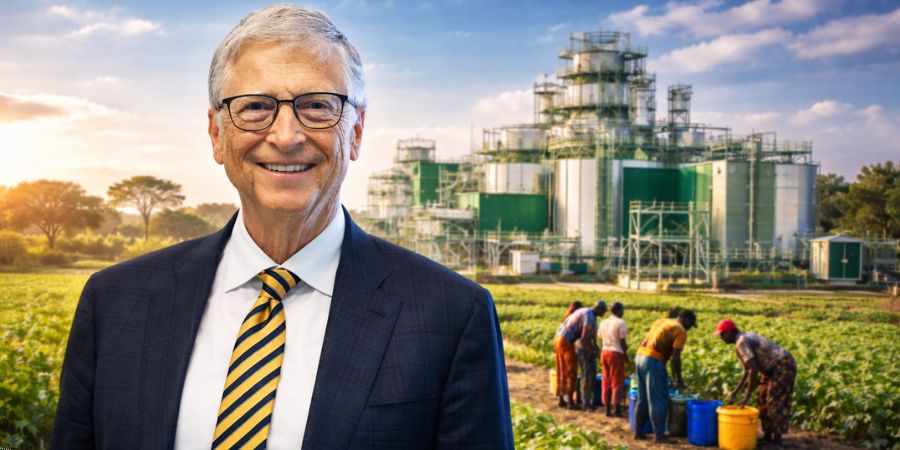
Bill Gates Launches Green Fertilizer Plant in Africa
Bill Gates, Co-chair of the Gates Foundation, officially inaugurated a large-scale “Green Fertilizer” production plant in Africa on April 10, 2026. The initiative aims to help farmers increase crop yields while reducing reliance on fossil fuels, marking a significant step toward sustainable agriculture and improved food security across the continent.
The newly launched facility is designed to produce environmentally friendly fertilizers using renewable energy sources. By replacing traditional fossil-fuel-based production methods, the plant is expected to lower carbon emissions and provide affordable solutions for smallholder farmers.
A Major Boost for Sustainable Agriculture
The green fertilizer plant represents a transformative move in modern farming practices. Fertilizers are essential for improving soil fertility and crop productivity, but conventional production methods are energy-intensive and environmentally harmful.
This new approach uses clean energy technologies, enabling farmers to access cost-effective inputs without contributing to climate change. As a result, the initiative supports both agricultural growth and environmental sustainability—two critical priorities for developing regions.
Why This News Is Trending Globally
The announcement has quickly gained global attention due to its potential impact on the ongoing food security crisis. Many parts of Africa face challenges such as poor soil quality, rising input costs, and climate-related disruptions.
By introducing a scalable and eco-friendly solution, Bill Gates and the Gates Foundation are addressing both immediate agricultural needs and long-term sustainability goals. The project highlights how private philanthropy can play a crucial role in solving global hunger challenges.
Strengthening Food Security in Developing Nations
Access to affordable and sustainable fertilizers can significantly improve crop yields, directly benefiting millions of farmers. Increased productivity not only enhances food availability but also boosts rural incomes and economic stability.
The initiative aligns with broader global efforts to achieve food security while reducing environmental impact. It also sets an example for other organizations and governments to invest in sustainable agricultural technologies.
What Comes Next?
As the green fertilizer plant begins operations, experts expect similar projects to emerge across other regions facing food insecurity. Continued investment and collaboration between philanthropic organizations, governments, and local communities could accelerate the adoption of sustainable farming solutions worldwide, potentially reshaping the future of global agriculture.