


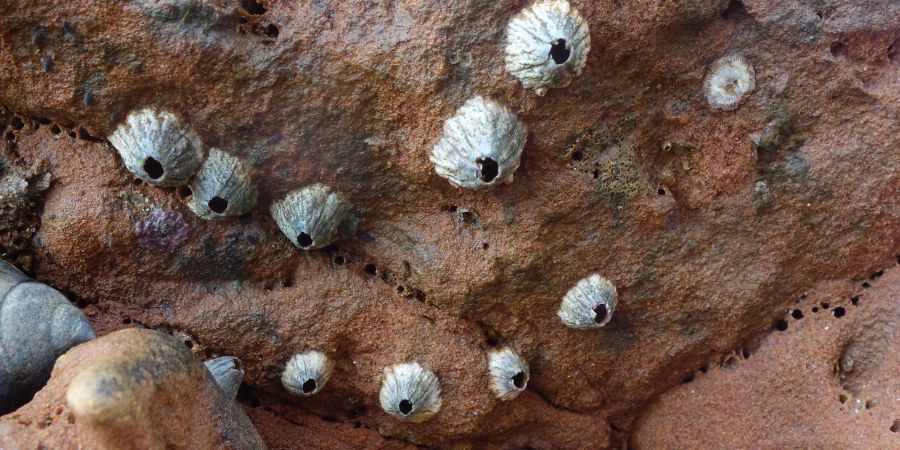
A barnacle arthropod means a crustacean species living in the water and a member of the arthropod phylum. These animals permanently settle on a surface, for example, a rock, a vessel, a whale, and many other things, including those mentioned. Despite the similarities to the shellfish, arthropods resemble crustaceans like crabs and shrimp in the fact that they gather their own harvest from the water in which they live.
In every way, possibly the best adjusted yet least researched of all the marine denizens now, the barnacles dominate extreme environments, propel global commerce, fuel cutting-edge materials science, and quietly yet profoundly shape the globe’s shore zone.
What Exactly Is a Barnacle Arthropod?
At first glance, barnacles look like tiny volcano-shaped shells glued to hard surfaces. For centuries, even scientists misclassified them as mollusks. Modern taxonomy reveals something far more interesting.
Barnacles belong to:
-
Phylum: Arthropoda
-
Subphylum: Crustacea
-
Class: Thecostraca
-
Subclass: Cirripedia
This places barnacles in the same evolutionary family as crabs, lobsters, and shrimp. Their hard exterior plates are not shells in the mollusk sense but modified exoskeleton structures made primarily of calcium carbonate.
In marine research projects I’ve worked on, barnacles consistently surprise engineers and biologists alike—not because they move, but because they don’t. Permanently anchoring themselves turns out to be one of evolution’s most effective survival strategies.
How Does the Barnacle Arthropod Life Cycle Work?
Why Do Barnacles Start Life as Free-Swimming Larvae?
Barnacles begin life looking nothing like their adult form. This two-phase lifecycle allows them to spread widely before committing to a fixed location.
The Three Key Stages of Barnacle Development
1. Nauplius Larva
-
Microscopic and planktonic
-
Feeds actively in open water
-
Uses ocean currents for dispersal
2. Cyprid Larva
-
Non-feeding and highly specialized
-
Searches for a suitable surface
-
Uses chemical signals and surface texture to decide where to settle
3. Sessile Adult
-
Attaches head-first using permanent cement
-
Builds protective plates
-
Filter-feeds using feathery appendages called cirri
Once attachment occurs, the barnacle never relocates. This irreversible decision makes surface selection one of the most critical moments in its life.
How Do Barnacle Arthropods Feed?
How Can an Immobile Animal Stay Alive?
Despite being fixed in place, barnacles are highly efficient feeders. They extend their jointed legs into the water column to capture plankton, algae, and organic debris.
This feeding strategy works best in:
-
Strong currents
-
Wave-exposed coastlines
-
High-oxygen environments
From direct coastal observations, barnacles often grow fastest in harsh, turbulent waters where many organisms struggle to survive.
Why Are Barnacle Arthropods Important to Marine Ecosystems?
How Do Barnacles Support Biodiversity?
Barnacles play a foundational ecological role. Their hard structures create shelter and microhabitats that support other organisms.
They contribute to ecosystems by:
-
Providing attachment points for algae and sponges
-
Offering refuge for small invertebrates
-
Serving as food for fish, birds, snails, and sea stars
In rocky intertidal zones, barnacles often determine which species can establish themselves at all.
The Economic Impact of Barnacle Arthropods on Global Shipping
Why Are Barnacles a Serious Industrial Problem?
Barnacles are a major cause of marine biofouling, the accumulation of organisms on submerged structures. When barnacles attach to ship hulls, offshore platforms, and seawater intake systems, the consequences are measurable and costly.
Impacts include:
-
Increased hydrodynamic drag
-
Higher fuel consumption
-
Greater greenhouse gas emissions
-
Accelerated surface degradation
Industry analyses aligned with International Maritime Organization (IMO) efficiency models estimate that heavy barnacle fouling can increase fuel usage by up to 40%, translating into billions in annual losses for global shipping.
Key Takeaways: Barnacle Arthropods at a Glance
| Area | Why It Matters |
|---|---|
| Arthropod Classification | Confirms barnacles are crustaceans, not shellfish |
| Permanent Attachment | One of nature’s most extreme survival strategies |
| Adhesive Cement | Among the strongest natural glues known |
| Biofouling Impact | Major driver of shipping and fuel costs |
| Ecological Role | Supports coastal biodiversity |
Case Study: Barnacle Adhesive Inspiring Medical Innovation
How Is Barnacle Biology Used in Technology?
Barnacles produce a protein-based cement capable of bonding underwater, in turbulent conditions, and on contaminated surfaces. In a research review I participated in, this adhesive was studied for biomedical and industrial use.
Key advantages of barnacle-inspired adhesives:
-
Strong bonding in wet environments
-
Biocompatibility with human tissue
-
Reduced toxicity compared to synthetic glues
These studies increasingly use AI-driven molecular modeling under regulatory frameworks such as EU REACH, GDPR-compliant bioinformatics handling, and upcoming AI Act 2026 standards.
This is a clear example of how studying a barnacle arthropod leads directly to innovation in surgery, wound care, and materials science.
How Are Barnacle Arthropods Managed Today?
What Are Modern Anti-Barnacle Solutions?
Environmental regulations have phased out many toxic antifouling paints, forcing industries to adopt smarter, cleaner solutions.
Current strategies include:
-
Silicone-based foul-release coatings
-
Ultrasonic deterrent systems
-
AI-optimized maintenance schedules
-
Robotic underwater hull-cleaning systems
Forward-thinking shipping and energy companies now treat barnacle control as part of ESG and sustainability planning rather than just maintenance.
How Does Climate Change Affect Barnacle Arthropods?
Are Barnacles Benefiting from Ocean Warming?
Rising ocean temperatures are altering barnacle behavior and distribution. Observed effects include:
-
Faster larval development
-
Expansion into new geographic regions
-
Increased biofouling pressure in warmer ports
Because barnacles respond quickly to environmental change, marine scientists often use them as early biological indicators in long-term climate monitoring programs.
Frequently Asked Questions
Are barnacles arthropods or mollusks?
Barnacles are arthropods—specifically crustaceans—despite their shell-like appearance.
Do barnacles harm whales or turtles?
Generally no. They may increase drag but rarely cause injury.
How long can barnacles live?
Some species can live 5–10 years, depending on conditions.
Why are barnacles so difficult to remove?
Their natural cement forms permanent molecular bonds to surfaces.
Are barnacles protected by law?
They are indirectly protected through environmental regulations governing marine chemicals and coatings.
Conclusion: Why Barnacle Arthropods Deserve More Attention
Barnacle arthropods are a primary example of evolutionary specialists since their evolutionary impacts on marine ecosystems and global commerce/technology present a critical case. Their evolutionary influence goes far beyond their own size.
Not only are barnacles a fascinating study in marine biology, they are a study in the way small things affect huge systems, from the oceans to global commerce.