


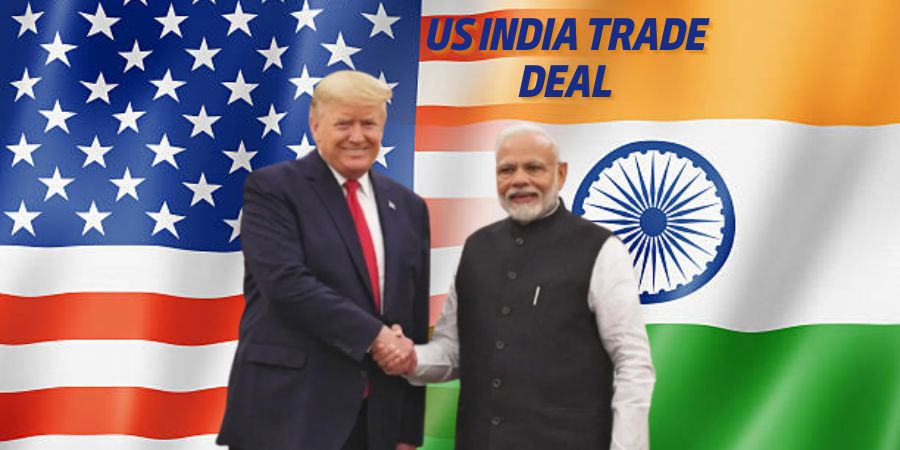
It has now become one of the most expected economic events of this decade: the US India trade deal. With a shifting global supply chain and altered geopolitical priorities, the two countries are aggressively rearranging how they trade, invest in, and grow with each other. This is not about numbers on a balance sheet but represents a deeper strategic partnership between two of the largest democracies in the world.
It was only recently, for mutual economic needs, that the impetus for a US India trade deal really picked up momentum. The United States seeks to diversity supply chains, while India positions itself as a global manufacturing and innovation hub. Due to this reason, there is a very rapid growth of expectations from this deal, making it very hot for discussion among policymakers, businesses, and investors.
Understanding the Basics of the US India Trade Deal
The India-US trade deal rests on decades of economic engagement. Traditionally, the trade relationship between the two countries has developed incrementally in the form of agreements rather than through a single comprehensive pact. However, current negotiations presage a more structured and ambitious framework.
Fundamentally, the US India trade deal seeks to strike a balance between market access and domestic priorities. India wants better access for its pharmaceuticals, IT services, and textiles; the US is eyeing agriculture, digital trade, and high-value manufacturing exports. Thus, both are negotiating cautiously to avoid hurting domestic industries while opening up newer avenues.
Reasons why the US India trade deal has become important at this point in time
Timing is also important to the relevance of the US-India Trade Agreement. International trade is currently undergoing changes whereby many nations are seeking to cut reliance on single source suppliers. In this regard, India emerged as one of the alternative suppliers for companies in the United States.
Furthermore, the US-India Trade Agreement is in line with geopolitical objectives. When it comes to economic collaboration, it increases the durability of a relationship in the face of international turbulence. This is the reason for the current focus on negotiations to reach a joint agreement.
Economic drivers of negotiation
There are several economic factors that could set a course in the US India trade deal: inflationary pressures, currency fluctuations, and labor market dynamics are all influencing negotiation strategies. Moreover, technological innovation has brought in new areas like digital services and data governance into trade talks.
Another driver is the push for fair competition. Both nations are addressing concerns related to subsidies, intellectual property rights, and regulatory transparency. The us india trade deal has sought to put in place clearer rules that incentivize investment for the long haul and growth in a sustainable manner.
Tariff challenges and strategic compromises
This makes one of the sensitive elements of the US India trade deal. The issue of tariff structure between India and the US has become a widely debated issue, as both countries sought to protect their domestic producers while reducing tariffs on barriers to trade.
While there is disagreement on many issues, one can also see some movement. Negotiators are considering a staged reduction and industry-specific exemptions. This way, the us india trade deal can be advanced incrementally, without sending economic shocks. Compromise has replaced confrontation as the guiding rule.
Industry-wise effects of the agreement
The us india trade agreement is likely to have a different bearing on various sectors. The manufacturing sector is likely to benefit from improved market access and technology. Likewise, agriculture exports are also likely to increase if bottlenecks are removed.
As regards the services industry, technology and professional services might find it more attractive with simplified visa requirements and the recognition of qualifications. On the other hand, the US trade deal framework might create new opportunities for startups and small businesses to easily operate and comply.
Strategic significance to the growth story of India
For India, the US India trade deal is more than just an impetus to exports. It is a step toward realizing the country’s dream of being one of the world’s leading economic powerhouses. Increased trade helps to attract direct foreign investments, employment opportunities, as well as talent.
In addition, the agreement further promotes the position of India in the global value chain. Since the manufacturing trend is moving away from traditional locations, it is a plus for India that it can lure US companies. As a result, the us india trade deal perfectly complements the national development goals.
The Strategic Significance of the United States
For the US, the us india trade agreement provides an opportunity to tap into the fastest-growing consumer market. Indeed, the growing middle class in India holds immense opportunities for American businesses in technology, healthcare, energy, and others.
Moreover, the increased trade also helps in developing a resilient supply chain. By presenting the US with multiple sources for procurement, the country becomes less vulnerable. So, the US India trade deal is also beneficial in a strategic manner because it underlines the importance of collaborative efforts over a period of time.
Political forces that impacted this agreement
The political will of the leaders of the two nations has played a significant role in determining the speed and extent of the us india trade agreement. A change in administration, election cycles, and other internal pressures could accelerate or slow the process. However, the bipartisan agreement to improve relations with India has remained strong.
The diplomatic dialogues are still focusing on the controversial topics in a constructive manner. The persistent engagement of the diplomatic dialogues has made it a reality that the us.india trade deal still tops the list despite the transition. The trust-building efforts over time have enabled bridging the gaps.
The role of technology and innovation
Technology has emerged as a defining element of the US India trade deal. Issues such as digital trade, data localization, and cybersecurity now lie at the heart of the negotiations between the two countries. Both the countries feel the rising need for setting standards in a manner that promotes innovation, while safeguarding their national interests.
The collaboration in emerging technologies like artificial intelligence and clean energy further enhances the deal’s relevance. Aligning policy allows the us india trade deal to encourage joint research, investment, and commercialization of next-generation solutions.
Market Reaction, Expectations, and Business Performance
The trade developments between us and ind are being watched intently by businesses. Market mood has been quite positive as it expects improved trade and regulatory conditions. This is why they have already been planning how to capitalize on it.
Reports regarding india us trade deal news have ignited excitement regarding this development. Companies are weighing changes to their supply chains, investments, and collaborations that may emerge after this happens.
Recent developments and Current status
The US India trade deal has made progress with a series of rounds of negotiations. Although a final statement has yet to emerge, incremental agreements show progress. People eagerly observe the latest news updates on the India-US trade deal.
Despite the challenges, there has been a reaffirmation of the commitment to a balanced outcome on both sides. Such dedication is a reflection of the importance attached to the US India trade deal.
Global trade implications in the long term
Apart from the benefits it will render to the two countries, the us-india trade agreement may affect the world trade regime. Since the two economies will align their trade practices, the trade agreement will possibly establish trade rules in the world.
The ripple effect described above underlines the significance of this deal. The us india trade deal acts as a source that establishes precedents and results in a predictable world trade order.
Addressing Concerns and Criticisms
The US India trade deal is expected to bring optimism, but at the same time, many stakeholders are criticizing it. Concerns are noted in several grounds such as job loss, displacement of small producers, and mainly the regulatory compliance costs. Policymakers are proceeding with the safeguard mechanism and transition measures.
Transparency and consultations with stakeholders are a must. The us india trade deal will thus lead to inclusive growth, rather than being confined to a few sectors, since their feedback has been incorporated into making decisions.
Future outlook and expectations
Going forward, the outlook for the US India trade deal appears to be a process of development rather than a sudden end to the deal. The incremental implementation process will help both economies to adjust and fine-tune their policies. An incremental approach to a deal would increase the chances of a successful long-term relationship.
Although the trade negotiations are still underway, there are strong prospects for the us india trade deal in redefining economic collaboration. It may lay down a successful model for future collaboration between developed and emerging economies.
Frequently Asked Questions
What is the main objective of the us india trade deal?
The primary objective is to enhance bilateral trade by reducing barriers, improving market access, and strengthening strategic economic cooperation.
How will the deal affect tariffs?
Tariff adjustments are a key focus, with discussions around india us tariff reductions through phased and sector-specific approaches.
Which sectors benefit the most?
Manufacturing, technology, services, and agriculture are expected to see significant benefits once the agreement is implemented.
Is the deal finalized?
No, negotiations are ongoing. Updates often appear in discussions related to india us trade deal news and policy statements.
Why is this deal important globally?
The agreement could influence global trade standards and demonstrate how large economies can collaborate amid changing geopolitical dynamics.
Conclusion
The US India trade deal is at the crossroads of economics, strategy, and innovation. This is a shared ambition and mutual trust built over years of engagement. As discussions progress, this deal has the potential to unlock growth, resilience, and opportunity for both nations—making it one of the most significant trade developments of our time.