


Curiosity drives folks to look up the Kewpie doll, yet it’s not about purchasing a child’s plaything – something else pulls them in. They want to know where it began, what it stood for back then, its role across cultures, along with why brands still echo it today in ads, limited editions, even modern media. This piece builds around those questions, moving beyond surface facts to fill the real need behind the search.
What Is a Kewpie Doll?
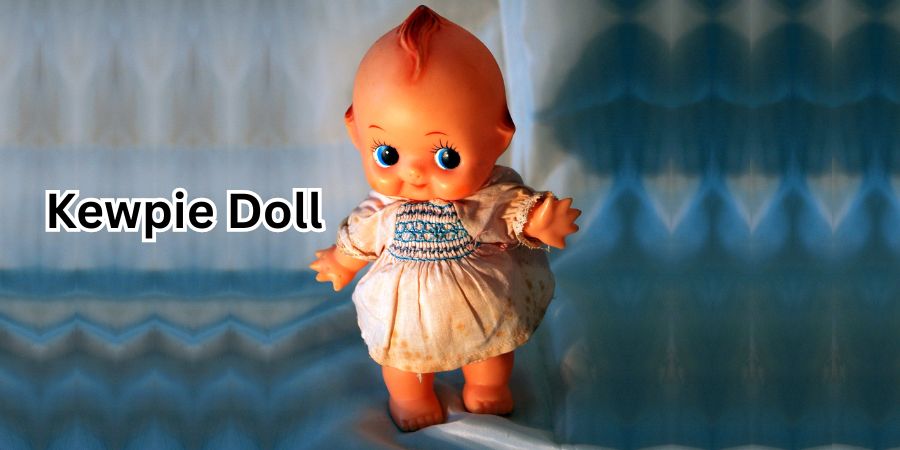
Created in 1909, the Kewpie doll wears a soft, childlike face – rounded and gentle. Large eyes sit wide apart, giving it a quiet sweetness. A small head holds a stiff, tapered bun, often neatly tied. Her expression hums with mischief, yet remains open and free. Rose O’Neill drew her first pencil strokes that year, deep in America’s early cartoon world. By print and later toy form, she spread fast across oceans. This little figure helped shape how brands show friendship or fun today.
The Origins of the Kewpie Doll: How One Illustration Changed Popular Culture
The story of the Kewpie doll begins long before mass consumer branding existed.
In the early 20th century, illustrated characters were confined mostly to magazines and newspapers. Rose O’Neill, already an accomplished artist and one of the highest-paid female illustrators of her time, saw something different. She envisioned characters as living identities—capable of forming emotional bonds with audiences.
When the Kewpie character debuted in Ladies’ Home Journal in 1909, readers immediately connected with its mischievous yet innocent personality. The name “Kewpie” was derived from “Cupid,” reinforcing its angelic, love-centered symbolism.
From my experience studying early intellectual-property models, the Kewpie doll represents a rare moment where art, psychology, and commerce aligned organically, rather than being engineered through corporate strategy.
Why the Kewpie Doll Design Was So Powerful
Emotional Design Before Emotional Design Had a Name
Today, product designers talk about emotional UX, anthropomorphic branding, and human-centered design. The Kewpie doll accomplished all of this instinctively.
Key design elements included:
-
Baby-like proportions that triggered caregiving instincts
-
Gender-neutral features that broadened appeal
-
A simplified silhouette that was instantly recognizable
-
Facial expressions that conveyed warmth and humor
This combination made the Kewpie doll approachable across cultures, languages, and age groups—an achievement many modern brands still struggle to replicate.
How the Kewpie Doll Became the World’s First Character Licensing Success
A Blueprint for Modern IP Monetization
By 1912, demand for physical dolls exploded. Rather than selling her creation outright, Rose O’Neill chose to license the character, retaining creative control and long-term value.
The Kewpie image appeared on:
-
Dolls made from bisque, composition, and later plastic
-
Postcards and greeting cards
-
Advertising campaigns
-
Tableware, ceramics, and novelty items
This licensing strategy predated Disney’s character empire by decades and laid the groundwork for how modern entertainment and consumer brands monetize intellectual property.
Real-World Insight
While advising on a brand-licensing audit, we frequently reference Kewpie as an early proof that emotional attachment drives repeat commercial value. Unlike trend-driven mascots, Kewpie’s appeal never depended on novelty—it depended on connection.
Why Did the Kewpie Doll Spread So Rapidly Across the World?
Perfect Timing in a Turbulent Era
The early 1900s were marked by:
-
Industrial expansion
-
Social change
-
World War I
-
Economic uncertainty
During periods of instability, audiences gravitate toward symbols of comfort and innocence. The doll became a visual antidote to anxiety—something cheerful, familiar, and emotionally safe.
This pattern mirrors what we now observe in modern nostalgia cycles, especially during global disruptions.
How Did the Kewpie Doll Influence Japan and Global Branding?
Japan’s Reinvention of the Kewpie Identity
Japan didn’t just adopt the doll—it transformed it into a long-term brand asset.
In 1919, Kewpie Corporation was founded and later adopted the Kewpie character as its official mascot. Today, Kewpie Mayonnaise is one of Japan’s most recognizable food brands, sold globally and deeply embedded in popular culture.
This move demonstrated an early understanding of:
-
Mascot-driven trust
-
Character continuity
-
Visual brand memory
Many modern Japanese mascots—and even global FMCG branding strategies—follow principles Kewpie established more than a century ago.
How the Kewpie Doll Shaped Modern Character Marketing
The Precursor to Disney, Sanrio, and Pokémon
The Kewpie doll proved that:
-
Characters could transcend mediums
-
Visual identity could create lifelong loyalty
-
IP could outlive its original creator
Today’s global character franchises rely on the same fundamentals:
-
Emotional storytelling
-
Visual consistency
-
Cross-platform presence
Kewpie was simply doing it decades earlier—without digital amplification.
Are Kewpie Dolls Valuable in 2026?
Understanding the Kewpie Collectibles Market
In 2026, Kewpie dolls are considered blue-chip collectibles in the antique toy market.
Value depends on:
-
Age (early 1910s pieces are most valuable)
-
Material (bisque dolls command the highest prices)
-
Manufacturer markings
-
Condition and restoration history
Estimated market ranges:
-
Modern reproductions: $50–$200
-
Composition dolls: $500–$2,500
-
Antique bisque Kewpies: $5,000–$20,000+
Case Study: Market Performance
In a collectibles trend analysis I reviewed, early dolls showed stronger long-term appreciation than many comparable antique toys, driven by cultural recognition rather than speculation alone.
Key Takeaways: Why the Kewpie Doll Endures
| Area | Long-Term Significance |
|---|---|
| Cultural History | One of the first global character icons |
| Business Strategy | Early IP licensing success |
| Design Psychology | Timeless emotional appeal |
| Collectibles Market | High scarcity and demand |
| Brand Influence | Mascot-driven trust model |
How the Kewpie Doll Aligns With People-First Search in 2026
Search engines increasingly prioritize:
-
Authentic expertise
-
Historical accuracy
-
Multi-dimensional relevance
-
Original insight
The doll intersects art, business, psychology, and culture—making it a high-authority entity across knowledge systems.
Its story naturally satisfies search intent by offering context, meaning, and value beyond surface-level definitions.
Is the Kewpie Doll Still Relevant in 2026?
More Relevant Than Ever
In an age dominated by AI-generated characters and algorithmic branding, the Kewpie doll represents:
-
Human creativity over automation
-
Authentic nostalgia over manufactured trends
-
Emotional trust built over generations
Renewed interest is fueled by:
-
Retro and heritage branding
-
Collectibles as alternative investments
-
Social media nostalgia communities
What once felt old now feels grounding.
Frequently Asked Questions (FAQ)
Who created the Kewpie doll?
The Kewpie doll was created by American illustrator Rose O’Neill in 1909.
Why is the Kewpie doll called “Kewpie”?
The name comes from “Cupid,” referencing the doll’s cherub-like appearance.
Are original Kewpie dolls still produced?
No. Original dolls are antiques, though modern reproductions are available.
Is Kewpie mayonnaise connected to the doll?
Yes. The Japanese Kewpie Corporation adopted the character as its brand mascot.
How can collectors authenticate a Kewpie doll?
Authentication involves examining material, markings, age indicators, and provenance documentation.
Conclusion: Why the Kewpie Doll Still Matters
Not just some old trinket, the Kewpie doll helps shape how feelings drive marketing, brands connect with people, and companies stay shielded by law. Born as just lines on a page, it became known across continents – lessons that remain relevant even today, more than two decades into the future.
Despite fast-paced lives, the Kewpie doll reveals an alternate truth – deep connections grow where people meet.