


In an era of rapid technological churn, where superficial breakthroughs dominate headlines and speed is mistaken for progress, the most consequential innovations often emerge quietly. They are not built to impress markets in quarters, but to endure across generations.
Energy innovation sits at the center of this reality. It is not merely a technological challenge, but a civilizational one, intersecting physics, infrastructure, economics, and human stability. The future of energy will not be decided by the loudest disruption or the most aggressive pitch deck. It will be shaped by systems capable of delivering continuous, resilient, and self-sustaining power long after their creators have stepped away.
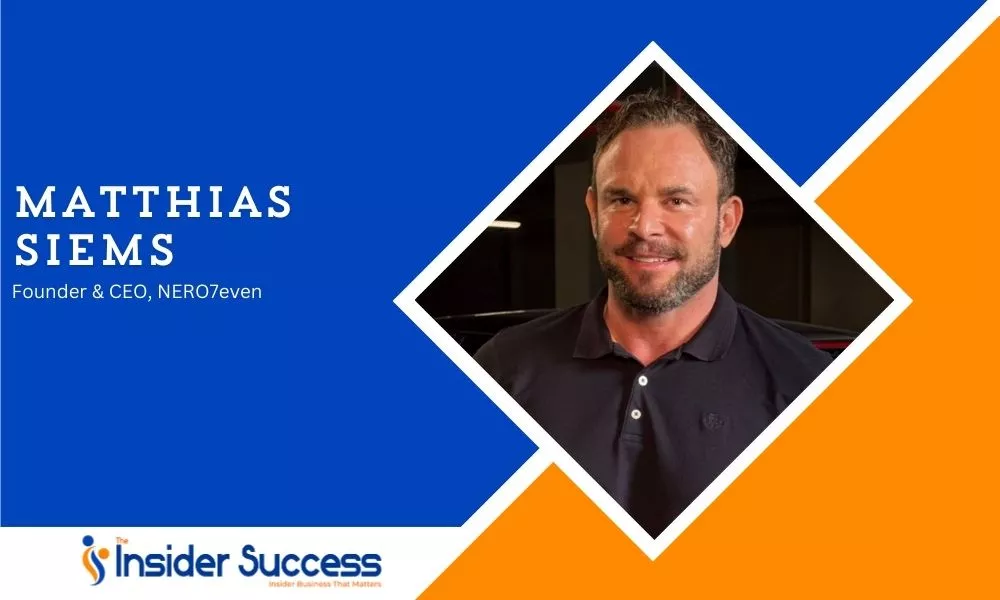
At the forefront of this shift stands Matthias Siems, an inventor whose work is defined not by spectacle, but by structural coherence. His approach is grounded in a disciplined conviction: that true innovation must be as stable as it is visionary.
Innovation Beyond Capital: The Work That Truly Matters
In popular discourse, innovation is often framed through capital growth, market disruption, or incremental efficiency gains. Yet this framing overlooks the deeper purpose of technological advancement, to solve systemic problems, not temporary ones.
The most transformative energy technologies do not merely seek efficiency. They challenge long-standing dependencies, fragilities, and inequities embedded in centralized power systems. They do so by rethinking fundamentals, how energy is generated, how it is sustained, and how it remains reliable under real-world conditions.
Across the global landscape, emerging approaches, from advanced fusion research to magnetically driven renewable concepts, illustrate the breadth of thinking aimed at redefining power generation. Even within these ambitious domains, one principle remains constant: motion and magnetic fields lie at the core of electricity generation, a relationship understood since Faraday’s earliest discoveries.
What differentiates Siems’ work is not the use of these principles but how they are organized.
TAP Technology: Establishing a New Category of Energy Systems
At the heart of Siems’ contribution is TAP Technology (Total Autonomous Power), a system that does not represent an incremental improvement on existing generators or motors, but the establishment of an entirely new technological category.
Unlike conventional magnetic systems, where permanent magnetic fields are treated as static and self-canceling over mechanical cycles, TAP is designed as a magneto-mechanical resonance system. It relies not on a single magnetic element, but on the collective, phase-shifted interaction of multiple magnetic materials, each with deliberately differentiated properties such as coercivity, remanence, anisotropy, and domain structure.
Through a plasma-assisted magnetization process under controlled vacuum conditions, magnetic domains and interfacial regions are actively reorganized into a persistently dynamic field configuration. This process enables the stabilization of magnetic states that are not achievable under conventional solid-state conditions.
The result is an anisotropic, nonlinearly coupled magnetic field system, in which magnetic forces do not symmetrically compensate over a mechanical cycle. When integrated into a mechanically guided structure, this engineered asymmetry produces a continuous, self-maintaining motion—not driven by fuel, combustion, chemical reactions, or external electrical excitation.
Importantly, the magnetic materials themselves do not deplete energy in the classical sense. Instead, they function as long-term carriers of a field-based structural order, enabling sustained mechanical work through system-level coherence rather than consumption.
If reproducibility, scalability, and long-term stability continue to be validated, TAP represents not just an engineering achievement but a fundamental extension of applied field physics.
The Quiet Architect: Building Beyond the Spotlight
While many technology narratives are driven by rapid scaling and media visibility, Siems has taken a markedly different path. His work has evolved outside the pressures of venture capital cycles and headline economics, allowing for deep validation, long time horizons, and structural refinement.
Industry observers now place the valuation of TAP Technology at over $8 billion at its current stage, with independent global audit projections estimating potential valuation growth to $30 billion within the next five years, contingent on continued validation and deployment.
Yet for Siems, valuation is not the destination, it is a byproduct.
He is focused on something far more demanding: endurance.
Where Innovation Truly Begins: Clarity of Purpose
For Siems, innovation is not a moment of inspiration. It is a methodical discipline—an inquiry into how systems behave under stress, complexity, and time.
Market culture often equates innovation with speed and disruption. Siems defines it differently: simplicity, coherence, and structural resilience. In physics, elegant solutions follow fundamental laws without unnecessary complexity. In human systems, innovation succeeds only when it reduces dependency and reinforces autonomy.
This philosophy informs both his inventions and his investment decisions. He does not support ideas that merely sound ambitious. He invests in coherent systems, technologies capable of functioning across economic cycles, political shifts, and long-term societal change.
Engineering Energy Sovereignty
At the core of Siems’ mission lies a concept increasingly central to global stability: energy independence.
Modern energy infrastructures remain vulnerable to centralized generation, global fuel dependencies, and geopolitical leverage. Recent global disruptions have exposed the fragility of these systems, through supply chain shocks, price volatility, and political risk.
Siems envisions a fundamentally different model: decentralized, self-contained energy systems capable of operating continuously without reliance on volatile external inputs.
In this context, TAP is not about replacing one energy source with another. It is about restructuring the architecture of power itself, transforming energy into a stable, sovereign asset.
Leadership Redefined: Influence Without Control
As Siems’ role has expanded from inventor to investor and thought leader, his definition of leadership has remained consistent. Leadership, for him, is not authority, it is credibility. Not control—but influence.
He works across disciplines, integrating insights from physics, engineering, economics, and policy. His credibility stems not from rhetoric, but from coherence, his ability to frame not only what should be built, but why it matters.
If TAP continues to validate its promise, Matthias Siems’ contribution will be historically situated not merely as an energy entrepreneur, but as the originator of a new physical-technical principle, one that reshapes how fields, materials, and motion are applied in real-world systems.
Conclusion: Power With Purpose
The story of Matthias Siems is not a story of disruption for disruption’s sake. It is a story of order introduced into complexity, of patience applied where speed fails.
In a time dominated by short-term metrics, his work demands longevity.
In an age of noise, it emphasizes coherence.
And in a world searching for energy security, it aligns belief with rigorous physical discipline.
History will not remember every headline written in 2026. It will remember the systems that continued to function as decades unfolded.
And it is innovators like Matthias Siems, who design for endurance rather than attention—who will determine what truly lasts.