


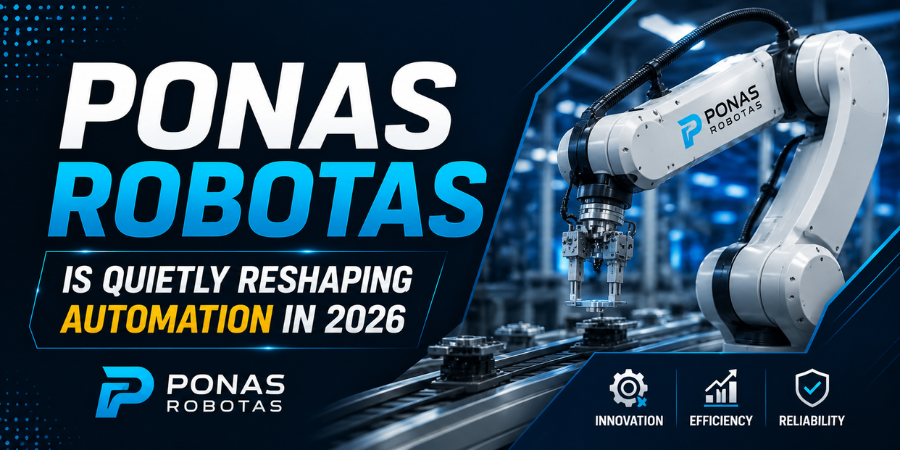
Technology rarely changes overnight. Most revolutions arrive slowly, almost unnoticed, until one day people realize the old way of doing things no longer makes sense. That is exactly where ponas robotas stands today. Across manufacturing plants, logistics hubs, research facilities, healthcare environments, and even smart homes, conversations around advanced robotics are becoming more practical and less futuristic. Businesses are no longer asking whether intelligent robotic systems matter. They are asking how quickly they can adapt. Ponas robotas has become part of that growing movement because it represents more than a machine. It reflects a shift toward precision, adaptability, efficiency, and human-centered automation that feels surprisingly realistic rather than science fiction.
What Is Ponas Robotas?
Ponas robotas refers to a modern robotic automation concept focused on intelligent task execution, adaptive machine learning integration, and real-world industrial efficiency. While the phrase itself has gained attention in different technology circles, it is increasingly associated with robotics systems designed to simplify complex operations while improving productivity and reducing human error.
Unlike traditional robotic systems that rely heavily on repetitive programming, newer ponas robotas solutions are built around flexibility. These systems can process data, respond to changing conditions, and improve performance through continuous learning models. That difference is important because modern industries no longer operate in predictable environments.
Factories experience shifting demand. Warehouses process dynamic inventory. Healthcare centers require rapid adaptation. Smart robotics must now think beyond fixed routines.
At its core, ponas robotas combines several technologies:
- Artificial intelligence
- Machine vision
- Sensor fusion
- Autonomous navigation
- Predictive analytics
- Cloud-connected systems
- Human-machine collaboration
Together, these technologies create robotic systems capable of handling more than mechanical repetition. They contribute to decision-making, optimization, and operational reliability.
Why Ponas Robotas Matters More in 2026
The global automation landscape has entered a different phase. Earlier robotics adoption focused mainly on cost reduction. In 2026, the priorities have evolved.
Companies now face several challenges simultaneously:
- Skilled labor shortages
- Rising operational costs
- Demand for faster production
- Increased accuracy expectations
- Safety compliance pressure
- Sustainability goals
- 24/7 operational demands
Ponas robotas systems address many of these pressures in a balanced way. Instead of replacing every human role, modern robotics increasingly works alongside people, handling repetitive or dangerous tasks while humans focus on oversight, creativity, and strategy.
This collaboration model is becoming essential across industries.
The Rise of Intelligent Automation
Automation used to mean fixed conveyor belts and robotic arms repeating identical actions for years. Intelligent automation is completely different.
Modern ponas robotas platforms can:
- Detect irregularities instantly
- Adjust movement patterns
- Optimize workflows automatically
- Learn from operational history
- Reduce downtime through predictive maintenance
- Improve quality control accuracy
That adaptability creates long-term operational advantages that static systems simply cannot match.
A Shift Toward Human-Centered Robotics
One reason ponas robotas has gained traction is its emphasis on usability. Earlier robotics platforms often required highly specialized technicians. Modern systems are becoming easier to deploy, monitor, and scale.
Interfaces are more intuitive. Remote monitoring is common. AI-driven diagnostics simplify troubleshooting. Small and medium-sized businesses now have access to automation tools that were once available only to massive corporations.
That democratization of robotics is changing entire industries.
The Core Technologies Behind Ponas Robotas
Understanding ponas robotas requires looking beneath the surface. The technology stack powering these systems is remarkably sophisticated.
Artificial Intelligence Integration
AI acts as the brain of advanced robotics systems. It enables machines to analyze patterns, recognize objects, and make operational adjustments.
For example, an AI-powered warehouse robot can:
- Identify misplaced inventory
- Calculate faster navigation routes
- Detect damaged packages
- Predict congestion points
- Adapt to workflow changes
The result is smoother and more efficient operations without constant human intervention.
Machine Vision Systems
Machine vision allows robotic systems to interpret visual information in real time. Cameras, depth sensors, and image recognition software work together to create environmental awareness.
This technology is especially valuable in:
- Manufacturing inspection
- Medical robotics
- Agricultural automation
- Autonomous delivery systems
- Quality control processes
Modern ponas robotas solutions often rely heavily on machine vision because visual intelligence dramatically improves precision.
Sensor Fusion Technology
Robotic systems collect data from multiple sources simultaneously. Sensor fusion combines these inputs into a unified understanding of the environment.
Typical sensors include:
- Infrared sensors
- LiDAR scanners
- Pressure sensors
- Temperature monitors
- Motion detectors
- Ultrasonic systems
Combining these inputs creates better situational awareness and safer robotic behavior.
Edge Computing and Cloud Connectivity
Real-time responsiveness is critical for automation systems. Ponas robotas platforms increasingly use edge computing to process critical data locally while leveraging cloud infrastructure for broader analytics and updates.
This balance improves:
- Response speed
- Data security
- Scalability
- Remote monitoring
- Software updates
- Operational analytics
The combination of local intelligence and cloud connectivity is becoming a standard architecture for advanced robotics.
Industries Being Transformed by Ponas Robotas
The influence of ponas robotas extends far beyond factories. Robotics is now shaping industries that once seemed impossible to automate effectively.
Manufacturing
Manufacturing remains one of the largest adopters of advanced robotics technology.
Modern production facilities use robotics for:
- Precision assembly
- Welding
- Packaging
- Inventory movement
- Defect detection
- Material handling
The biggest improvement is consistency. Robots can maintain accuracy levels that reduce waste and improve product reliability over time.
Smart factories powered by ponas robotas systems also collect operational data continuously, allowing managers to optimize workflows with greater precision.
Healthcare
Healthcare robotics has evolved rapidly in recent years. Surgical robotics, rehabilitation devices, and automated pharmacy systems are becoming more sophisticated.
Ponas robotas applications in healthcare may include:
- Robotic-assisted surgeries
- Patient transportation
- Medication dispensing
- Laboratory automation
- Elderly care support
- Remote diagnostics assistance
Healthcare providers increasingly value robotics not only for efficiency but also for safety and precision.
Logistics and Warehousing
E-commerce growth placed enormous pressure on logistics systems worldwide. Warehouses now require faster fulfillment, accurate inventory tracking, and continuous operations.
Robotics helps achieve these goals through:
- Autonomous mobile robots
- Smart sorting systems
- Automated picking
- Real-time inventory monitoring
- Predictive demand management
Large fulfillment centers already rely heavily on robotics, but smaller businesses are beginning to adopt scalable solutions as costs become more accessible.
Agriculture
Agricultural robotics is quietly becoming one of the most important automation sectors.
Ponas robotas systems can assist with:
- Crop monitoring
- Precision irrigation
- Soil analysis
- Automated harvesting
- Pest detection
- Livestock monitoring
These technologies help improve resource efficiency while addressing labor shortages in farming communities.
Hospitality and Service Industries
Hotels, restaurants, and customer service environments are also experimenting with robotics.
Examples include:
- Automated room service
- Cleaning robots
- Smart concierge systems
- Kitchen automation
- Delivery robotics
While human interaction remains important, repetitive operational tasks are increasingly being automated.
Benefits of Ponas Robotas Systems
Businesses adopting robotics typically expect productivity gains, but the benefits extend much further.
Improved Operational Efficiency
Robotic systems can work continuously with minimal interruption. This increases production consistency while reducing delays caused by fatigue or repetitive strain.
Efficiency improvements often appear in:
- Faster processing times
- Reduced operational bottlenecks
- Better workflow management
- Improved output accuracy
Enhanced Workplace Safety
Dangerous environments remain one of the strongest cases for robotics adoption.
Robots can safely handle:
- Hazardous chemicals
- Heavy lifting
- Extreme temperatures
- Repetitive strain tasks
- High-risk inspection environments
Reducing workplace injuries benefits both employees and organizations.
Better Data Collection
Modern robotics systems generate enormous amounts of operational data.
This data helps organizations:
- Predict maintenance needs
- Improve resource allocation
- Identify inefficiencies
- Reduce waste
- Optimize production schedules
Data-driven operations are becoming a major competitive advantage.
Long-Term Cost Optimization
Although robotics deployment requires investment, long-term operational savings can be substantial.
Organizations may reduce:
- Downtime expenses
- Production waste
- Labor shortages impact
- Quality control losses
- Maintenance unpredictability
The financial benefits often become more noticeable over several years rather than immediately.
Common Misconceptions About Ponas Robotas
Despite rapid growth, several myths still surround robotics technology.
“Robots Will Replace Every Human Job”
This fear appears in almost every automation discussion, but reality is more nuanced.
Most advanced robotics systems are designed to complement human workers rather than eliminate them entirely. Humans still handle creativity, emotional intelligence, strategic decision-making, and complex problem-solving far better than machines.
Automation usually changes job structures rather than erasing all employment opportunities.
“Robotics Is Only for Large Corporations”
This assumption used to be accurate. It is no longer true.
Cloud-based software, modular robotics platforms, and lower hardware costs have opened automation opportunities for smaller businesses.
Even mid-sized companies can now implement scalable robotics solutions without building massive infrastructure.
“Robots Require Constant Supervision”
Modern systems are far more autonomous than earlier generations. Many ponas robotas platforms can self-monitor performance, detect maintenance issues, and adapt to workflow changes automatically.
Human oversight still matters, but the level of manual intervention has decreased dramatically.
Practical Tips Before Adopting Ponas Robotas
Organizations considering robotics adoption should approach the process strategically rather than emotionally.
Start With Clear Operational Problems
The best robotics deployments solve specific problems.
Examples include:
- Production delays
- Quality inconsistencies
- Safety concerns
- Inventory inaccuracies
- Labor shortages
Buying technology without a defined operational goal often leads to disappointing results.
Evaluate Scalability
Businesses should avoid systems that cannot grow with operational demands.
Flexible robotics platforms offer better long-term value because they can evolve alongside business expansion.
Prioritize Training
Technology adoption works best when employees understand how to interact with new systems confidently.
Training should include:
- System monitoring
- Safety procedures
- Maintenance basics
- Workflow integration
- Troubleshooting awareness
Well-trained teams adapt more quickly to automation transitions.
Focus on Integration
Robotics should support existing operational ecosystems rather than disrupt them unnecessarily.
Successful deployments usually integrate with:
- ERP systems
- Warehouse management software
- Manufacturing execution systems
- Data analytics platforms
Smooth integration improves efficiency significantly.
Real-World Use Cases of Ponas Robotas
Theory matters, but practical applications reveal the true value of robotics systems.
Smart Warehouses
Modern warehouses use robotics to move inventory efficiently while reducing fulfillment delays.
Autonomous robots navigate storage aisles, locate products, and transport materials without requiring direct human guidance.
Benefits include:
- Faster order processing
- Reduced picking errors
- Improved inventory visibility
- Lower operational congestion
Precision Manufacturing
High-precision manufacturing industries rely heavily on robotic consistency.
Electronics production, automotive assembly, and aerospace manufacturing require accuracy that manual labor alone cannot always maintain.
Ponas robotas systems help maintain microscopic precision standards across large production volumes.
Medical Assistance Robotics
Hospitals increasingly use robotic systems for repetitive support tasks.
Examples include:
- Automated medication delivery
- Sterilization systems
- Patient movement assistance
- Surgical support technologies
These tools help healthcare professionals focus more on patient care.
Agricultural Monitoring
Drones and field robotics are helping farmers monitor crop conditions with remarkable detail.
Sensors can detect:
- Soil moisture variations
- Disease risks
- Nutrient deficiencies
- Pest activity
Early detection improves productivity while reducing resource waste.
Challenges Facing Robotics Adoption
Even promising technologies face obstacles.
High Initial Investment
Robotics deployment can require substantial upfront costs, especially for custom industrial systems.
Expenses may include:
- Hardware acquisition
- Software licensing
- Infrastructure updates
- Employee training
- Maintenance planning
Organizations must evaluate long-term return on investment carefully.
Cybersecurity Risks
Connected robotics systems introduce new cybersecurity concerns.
Threats may involve:
- Unauthorized access
- Operational disruption
- Data breaches
- Network vulnerabilities
Strong cybersecurity frameworks are essential for protecting automated environments.
Workforce Transition Concerns
Employees sometimes fear automation because they worry about job displacement.
Businesses that communicate clearly and invest in workforce development usually experience smoother transitions.
Upskilling programs are becoming increasingly important in automated industries.
Technical Complexity
Advanced robotics systems can be technically demanding, particularly during deployment and integration stages.
Organizations often require partnerships with experienced robotics specialists to ensure successful implementation.
Expert Insights on the Future of Ponas Robotas
Industry experts increasingly believe robotics will become as fundamental as the internet or cloud computing.
Several trends are shaping the next phase of development.
Collaborative Robotics Will Expand
Collaborative robots, often called cobots, are designed to work safely alongside humans.
These systems are expected to grow rapidly because they combine human adaptability with robotic efficiency.
Cobots are especially useful for:
- Assembly assistance
- Packaging operations
- Quality inspections
- Medical environments
AI Will Make Robotics More Independent
Future robotics systems will likely become more autonomous through improved machine learning models.
This could enable:
- Better environmental understanding
- Faster adaptation
- Smarter decision-making
- Reduced programming requirements
The line between automation and intelligence will continue to blur.
Sustainability Will Influence Robotics Design
Energy efficiency and environmental responsibility are becoming central design priorities.
Future ponas robotas systems may focus on:
- Lower energy consumption
- Recyclable materials
- Smarter resource usage
- Waste reduction
- Sustainable manufacturing practices
Automation is increasingly connected to broader sustainability goals.
Consumer Robotics Will Grow
Industrial robotics receives most attention, but consumer robotics is expanding rapidly as well.
Home robotics may include:
- Smart cleaning systems
- Personal assistance devices
- Security monitoring robots
- Elder care technologies
As hardware costs decrease, household robotics could become far more common.
Ponas Robotas and the Human Future
One of the most interesting aspects of robotics is how it changes the relationship between humans and machines.
Earlier generations viewed robots primarily as tools. Modern systems are becoming collaborative partners within operational ecosystems.
That shift raises important questions:
- How should humans supervise intelligent systems?
- Which tasks should remain human-centered?
- How do organizations maintain ethical automation practices?
- What skills will matter most in automated industries?
These questions do not have simple answers, but they are becoming increasingly important as robotics capabilities expand.
The future likely will not involve humans competing against machines. Instead, success may depend on how effectively people and intelligent systems work together.
The Competitive Advantage of Early Adoption
Businesses that adopt advanced robotics thoughtfully often gain meaningful advantages.
These advantages may include:
- Faster delivery capabilities
- Better production consistency
- Reduced operational waste
- Improved scalability
- Stronger customer satisfaction
However, successful adoption requires more than buying equipment. It requires long-term planning, operational understanding, and realistic expectations.
Organizations that rush into automation without preparation often struggle. Those that align robotics with clear operational objectives typically achieve stronger outcomes.
Ethical Considerations Around Robotics
As robotics systems become more autonomous, ethical discussions are becoming unavoidable.
Important concerns include:
- Data privacy
- Workforce displacement
- Algorithmic bias
- Accountability
- Decision transparency
Responsible robotics development requires balancing innovation with social responsibility.
Many experts believe ethical frameworks will become a standard part of robotics regulation in the coming years.
Why Ponas Robotas Continues to Gain Attention
The growing interest around ponas robotas reflects a larger transformation happening across industries worldwide.
Businesses no longer view automation as optional experimentation. It is becoming part of long-term operational survival.
Consumers expect faster service. Supply chains require resilience. Healthcare systems demand precision. Agriculture faces resource pressure. Manufacturing requires efficiency.
Robotics addresses many of these challenges simultaneously.
That is why the conversation surrounding ponas robotas keeps expanding. It represents a broader movement toward intelligent systems capable of supporting increasingly complex modern operations.
FAQs
What is ponas robotas used for?
Ponas robotas is commonly associated with advanced robotics and intelligent automation systems used in manufacturing, logistics, healthcare, agriculture, and smart operational environments.
Why is ponas robotas becoming popular in 2026?
The growing demand for efficiency, workplace safety, precision, and scalable automation has increased interest in robotics technologies that can adapt to changing operational needs.
Can small businesses benefit from ponas robotas systems?
Yes. Modern robotics platforms are becoming more affordable and scalable, allowing smaller businesses to adopt automation without massive infrastructure investments.
Is ponas robotas connected to artificial intelligence?
Yes. Many ponas robotas systems integrate artificial intelligence, machine vision, predictive analytics, and sensor technologies to improve automation capabilities.
Will robotics completely replace human workers?
Most experts believe robotics will mainly transform job roles rather than eliminate all human work. Humans remain essential for creativity, strategy, oversight, and complex decision-making.
Conclusion
Ponas robotas is no longer just an emerging concept discussed in technology conferences or futuristic predictions. It has become part of a real operational shift happening across industries in 2026. From manufacturing floors and smart warehouses to healthcare systems and agricultural fields, robotics is steadily changing how work gets done, how businesses scale, and how humans interact with intelligent machines.
What makes this evolution especially important is its practicality. Modern robotics is not only about speed or automation anymore. It is about adaptability, safety, precision, and sustainable growth. Companies adopting these technologies thoughtfully are positioning themselves for a future where efficiency and flexibility matter more than ever.
The most successful organizations will likely be the ones that treat robotics as a collaborative tool rather than a replacement strategy. As ponas robotas continues to evolve, the real opportunity lies in combining human creativity with machine intelligence in ways that improve both productivity and everyday life. The industries paying attention today may ultimately shape the standards everyone else follows tomorrow.
Also Read: Edivawer Revolution 2026: The Powerful Secret Transforming Digital Growth