


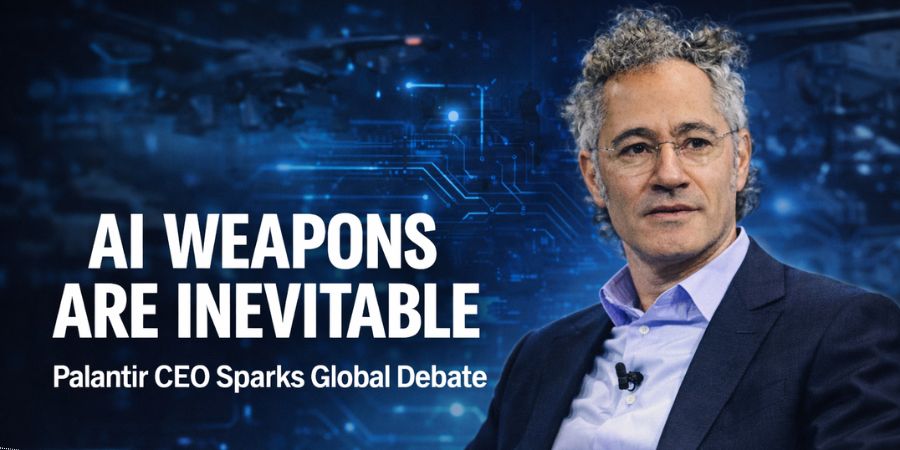
Palantir Declares AI Weapons “Inevitable” in New Manifesto
Palantir Technologies has ignited a global debate after publishing a bold 22-point manifesto on X (formerly Twitter), asserting that AI-driven weapons are “inevitable” and essential for modern defense systems. The statement comes at a pivotal moment, as the U.S. Department of Defense formally elevates Palantir’s Maven AI program into a core program of record.
The manifesto outlines the company’s stance that artificial intelligence will play a defining role in future conflicts, arguing that democratic nations must lead in developing such technologies to maintain global security and deterrence.
Pentagon Endorsement Boosts Maven AI Program
The controversy intensified following the Pentagon’s decision to designate Palantir’s “Maven” AI as a central component of U.S. military operations. Originally developed to enhance intelligence analysis, Maven uses machine learning to process vast amounts of surveillance data and identify potential threats in real time.
Palantir’s leadership, including CEO Alex Karp, has long advocated for closer collaboration between Silicon Valley and defense agencies. This latest development signals growing institutional trust in AI-powered systems within national security frameworks.
Ethical Concerns Fuel Global Debate
The company’s assertive messaging has triggered widespread criticism from human rights organizations and AI ethicists. Critics argue that the normalization of autonomous or semi-autonomous targeting systems raises serious concerns about accountability, civilian safety, and compliance with international law.
At the center of the debate is the role of AI in recent military operations, where systems like Maven are believed to assist in identifying targets. Opponents warn that increased reliance on such technologies could lead to unintended escalation and reduced human oversight in life-and-death decisions.
Why Palantir Is Trending Now
Palantir is trending globally due to the convergence of two major developments: its unapologetic stance on AI warfare and the Pentagon’s endorsement of its technology. The manifesto’s tone—framing AI weapons as both unavoidable and necessary—has amplified discussions across political, technological, and ethical domains.
Supporters, particularly defense analysts, argue that embracing AI is crucial to counter adversaries who are rapidly advancing similar capabilities. Meanwhile, critics fear that this trajectory could accelerate a global arms race in autonomous weapons.
What Comes Next for AI in Defense?
As Palantir continues to position itself at the forefront of AI-driven defense innovation, the broader conversation around regulation, oversight, and ethical boundaries is expected to intensify. Governments, tech companies, and international bodies may soon face increased pressure to establish clearer frameworks governing the use of AI in warfare.
The coming months will likely determine whether initiatives like Maven become a global standard—or a flashpoint for stricter international controls on autonomous military technologies.
Also Read: Anne Hathaway Stuns as Pop Star Inspired by Reputation Tour